
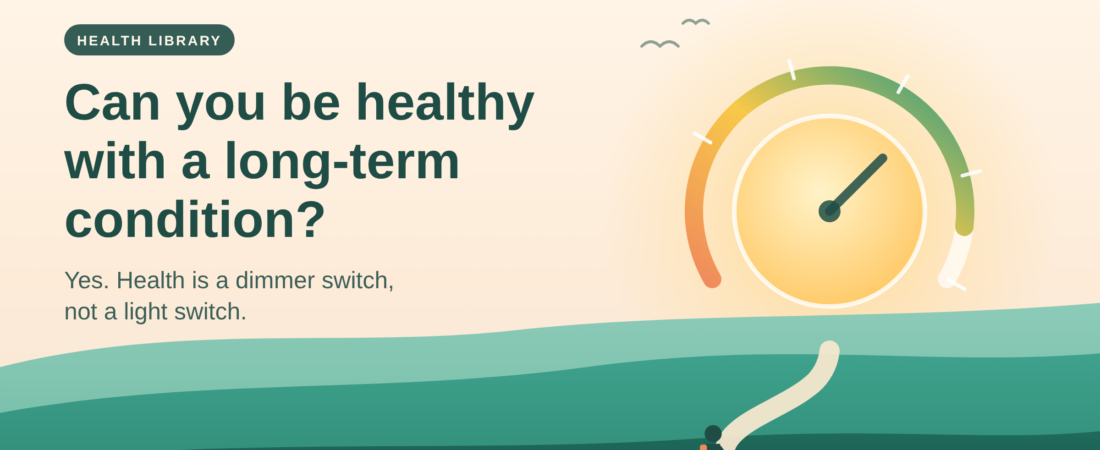
“I’ve got diabetes, so I’m not really healthy anymore, am I?”
I hear versions of this question all the time. Someone is diagnosed with high blood pressure, high cholesterol, asthma or diabetes, and quietly files themselves under “unhealthy” for the rest of their life. I want to explain why I think that’s the wrong box, and what health really means today.
Why this question matters more than ever
We are living longer than any generation before us. Treatments have improved, conditions are picked up earlier, and healthcare can do far more than it could 50 years ago. The result is that many of us now live for years, often decades, with one or more long-term conditions, especially as we get older (1).
That’s good news, but it raises a fair question. If so many of us have a long-term condition, can we still call ourselves healthy?
From a light switch to a dimmer switch
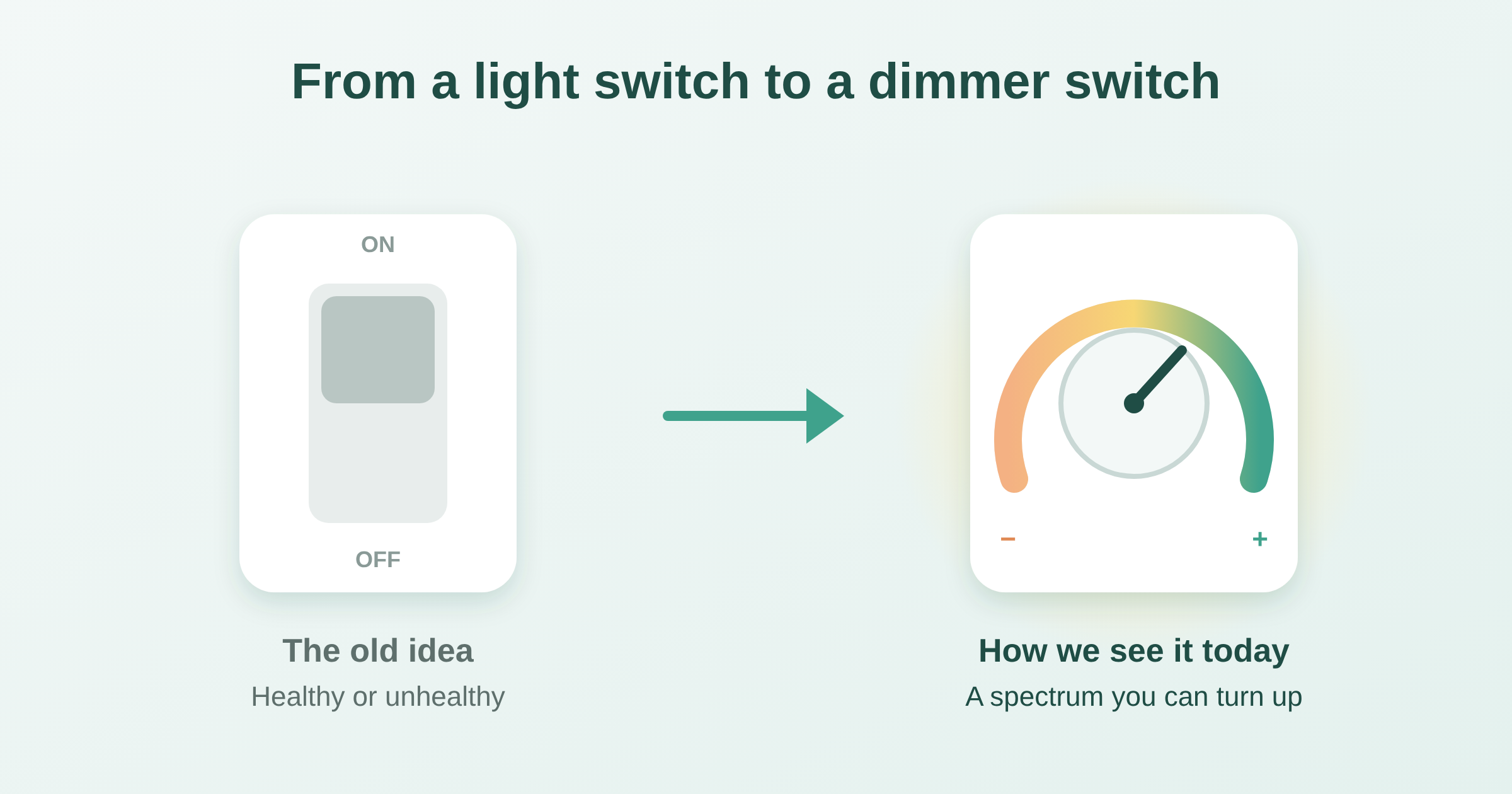
After the Second World War, in 1948, the World Health Organization (WHO) described health as complete physical, mental and social well-being, not just the absence of disease (2). It was a bold and caring idea for its time. But the word “complete” turned health into a light switch: you were either on (healthy) or off (unhealthy). In 1986, WHO began describing health as a resource for everyday life rather than the goal of life itself (3). Since then, thinking has moved further. Today, health is understood more like a dimmer switch, a spectrum that goes up and down through life. What matters most is how well we adapt and cope with what life throws at us, and whether we can live the life that matters to us (4, 5, 6).
Think of your body like a car
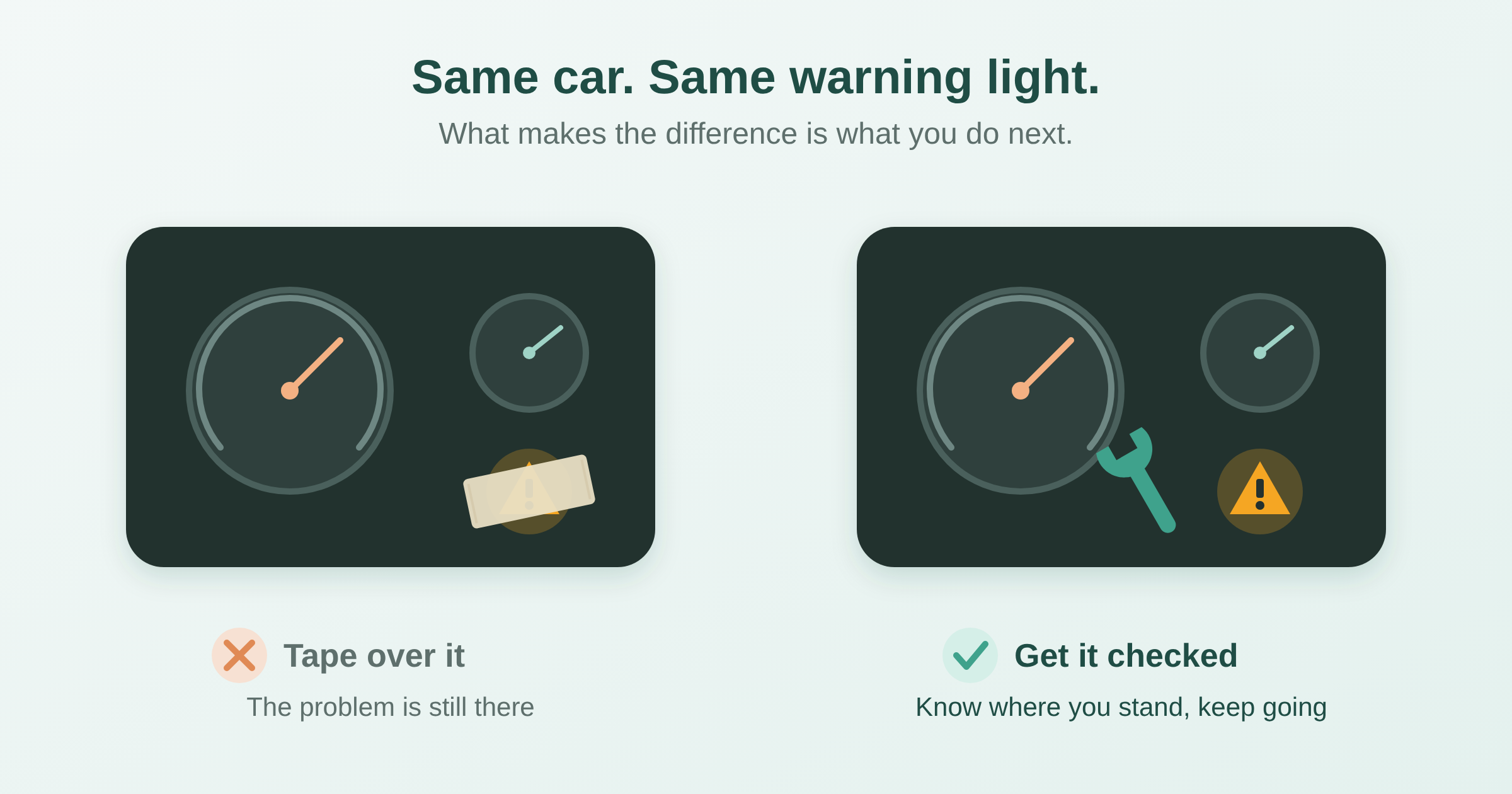
Imagine two identical cars, same make, same age, setting off on the same long road trip. Halfway there, the same warning light comes on in both.
The first driver puts a piece of tape over the light and keeps going, hoping for the best.
The second driver pulls in, gets the car checked, finds out what’s wrong, and follows the mechanic’s advice. From then on, they keep an eye on the dashboard and get regular services.
Same car. Same warning light. Which one is more likely to reach its destination and enjoy the ride? The second one.
A long-term condition is like that warning light. It doesn’t mean your journey is over, and it doesn’t make your car a bad car. It simply tells you something needs attention. With the right checks (your reviews), the right maintenance (medicines, food, activity, sleep), and a driver who understands the car (you), you can still go a long way.
So what does “healthy” look like with a long-term condition?
From what we now understand, and from my experience of looking after patients, I’d sum it up with five simple questions:
- Control: Is my condition being checked regularly, and are my results in the range my healthcare team recommends for me?
- Daily life: Can I do the things that matter to me, such as work, family and hobbies?
- Feeling: How do I feel in myself, both physically and in my mood?
- Purpose: Do I have things I enjoy and look forward to?
- Coping: Do I understand my condition, feel confident managing it, and know when to ask for help?
If most of your answers are “yes,” you can feel confident calling yourself healthy. A “no” is not a failure. It’s your dashboard showing you where a little extra support could help, so talk to your healthcare team about it (5, 6, 7).
Not ready to start treatment? Stay in the loop.
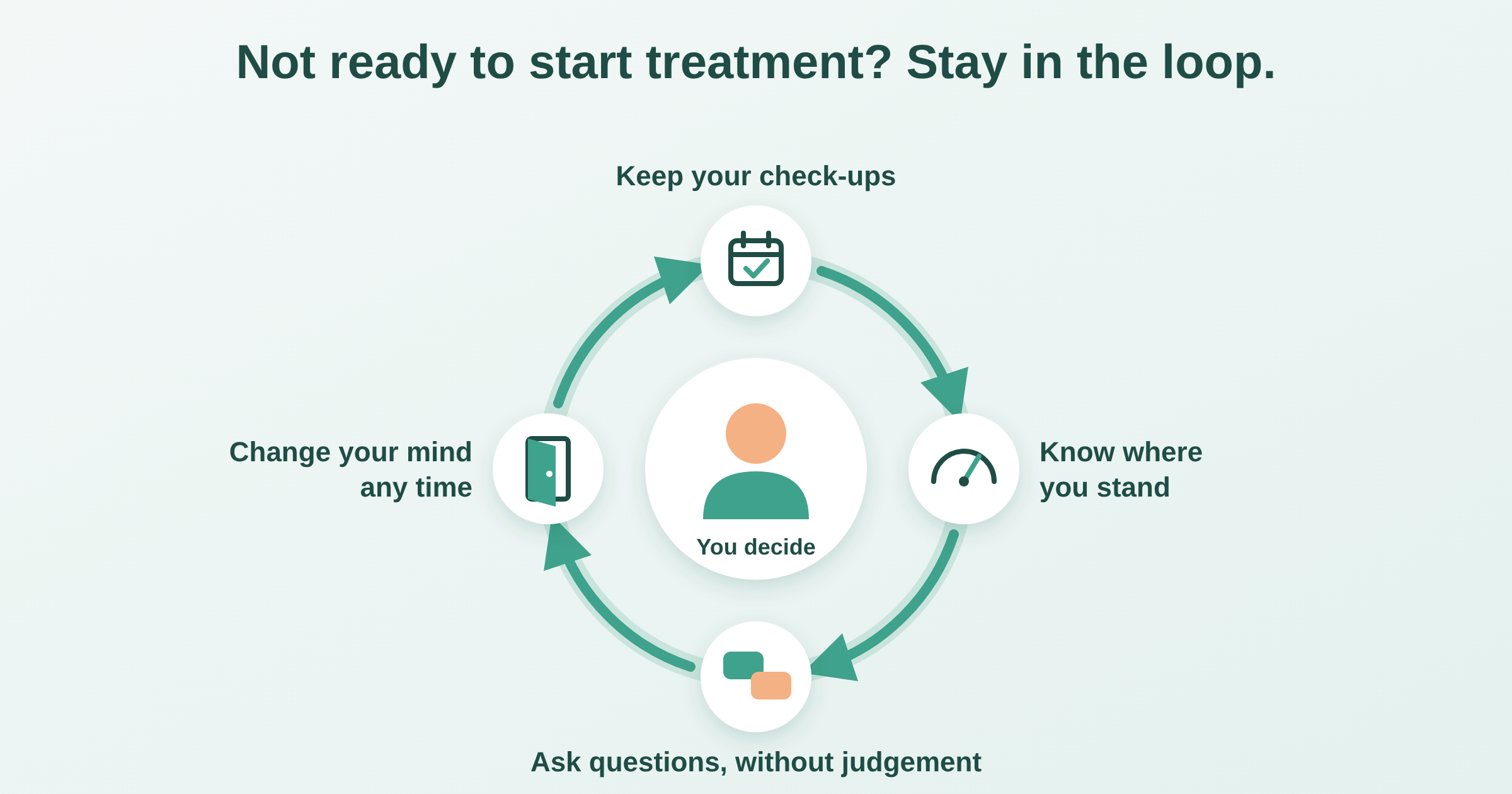
In clinical practice, healthcare professionals often meet people who would rather not start a treatment for their condition, such as tablets, injections or other medicines. Some aren’t sure yet. Some have heard a worrying story from a friend or picked up a myth online. Some simply feel it isn’t right for them. Whatever the reason, the choice is yours, and you have every right to make it (8).
My one request is this: don’t step out of the loop. Keep coming to your check-ups, even if you’ve decided against treatment for now. Some long-term conditions are silent. High cholesterol and high blood pressure usually cause no symptoms, yet they quietly raise your risk of a heart attack or stroke. Type 2 diabetes doesn’t always cause symptoms either (9, 10, 11, 12). Covering a warning light with tape doesn’t fix the car.
Staying in the loop doesn’t commit you to anything. It means your healthcare team can keep an eye on things and you’ll always know where you stand. And if you change your mind later, or have questions about something you’ve heard, you can talk it through with them openly, without judgement.
Myth vs Fact
Myth: If you have a long-term condition, you can’t be healthy.
Fact: Being free of disease isn’t required to be healthy. Many people with a well-managed long-term condition live full, active and healthy lives (5, 6).
The bottom line
A diagnosis is not a verdict. Health isn’t a light switch that turns off the day you’re told you have a condition. It’s a dimmer switch you can keep turning up by understanding your condition, keeping up with your checks, and focusing on what matters to you. You can live with a long-term condition and still be healthy.
This page is for general education only and is not personal medical advice. If you’re worried about your health or your condition, please speak to your GP, practice nurse or pharmacist. For urgent advice, contact NHS 111, or call 999 in an emergency.
References
Health and ageing
- World Health Organization. Ageing: facts in pictures. Beard JR, et al. The World report on ageing and health. Lancet 2016;387:2145–54.
- World Health Organization. Constitution of the World Health Organization. 1948.
- World Health Organization. Ottawa Charter for Health Promotion. 1986.
- Krahn GL, et al. It’s time to reconsider how we define health. Disability and Health Journal 2021;14(4):101129.
- Huber M, et al. How should we define health? BMJ 2011;343:d4163. Huber M, et al. BMJ Open 2016;6:e010091.
- World Health Organization. Healthy ageing and functional ability (Q&A). 2020.
- NICE. Multimorbidity: clinical assessment and management (NG56). 2016.
- NICE. Shared decision making (NG197). 2021.
Cholesterol and heart risk
- NICE. Cardiovascular disease: risk assessment and reduction, including lipid modification (NG238). 2023. ESC/EAS. 2025 Focused Update of the 2019 Guidelines for the management of dyslipidaemias. Eur Heart J 2025;46(42):4359–78. Lipid Association of India. 2023 update on cardiovascular risk assessment and lipid management in Indian patients: Consensus Statement IV. J Clin Lipidol 2024;18(3):e351–73.
Blood pressure
- NICE. Hypertension in adults (NG136). ESC. 2024 Guidelines for the management of elevated blood pressure and hypertension. Eur Heart J 2024;45(38):3912–4018. AHA/ACC. 2025 Guideline for the prevention, detection, evaluation and management of high blood pressure in adults. J Am Coll Cardiol 2025;86(18):1567–678. Association of Physicians of India. Indian Guidelines on Hypertension-IV. 2019.
Type 2 diabetes
- NICE. Type 2 diabetes in adults: management (NG28). American Diabetes Association. Standards of Care in Diabetes—2026. Diabetes Care 2026;49(Suppl 1). RSSDI. Clinical Practice Recommendations for the Management of Type 2 Diabetes Mellitus 2022. Int J Diabetes Dev Ctries 2022;42(Suppl 1).
Patient information (read more)
- NHS. High cholesterol; High blood pressure; Symptoms of type 2 diabetes. nhs.uk.