
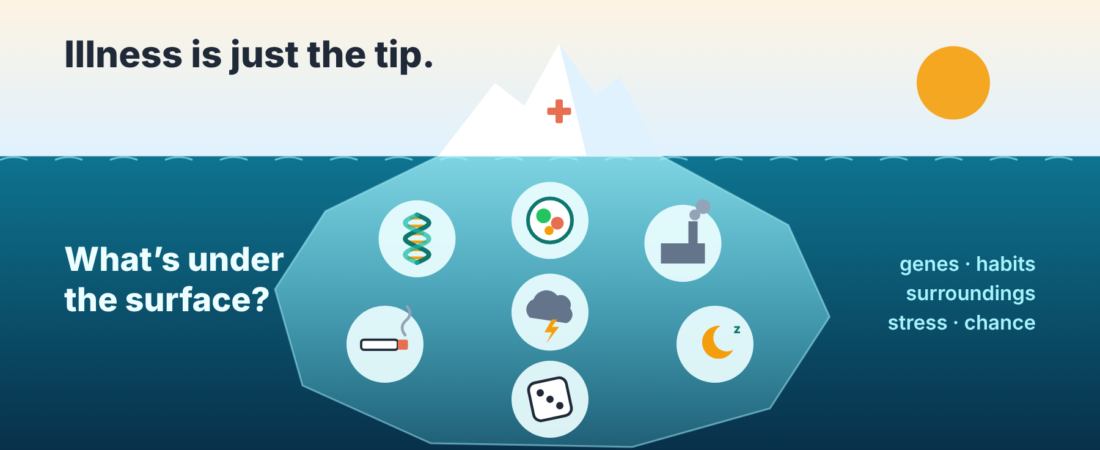
“Why me, doctor? I eat well, and nobody in my family has this.”
I hear this often. I also hear the opposite: “It runs in my family, so there’s nothing I can do.”
Both are only half true. Let’s find out why.
Your body is always balancing
In What is health?, we learned that health is not just “having no disease.” It is your ability to cope with life’s stresses and keep going.
Every second, your body works to keep things steady: your temperature, blood sugar, blood pressure, water and salt. Doctors call this balance homeostasis.
Picture a tightrope walker. A gust of wind comes, and they lean, adjust and carry on. That is your body on a normal day.
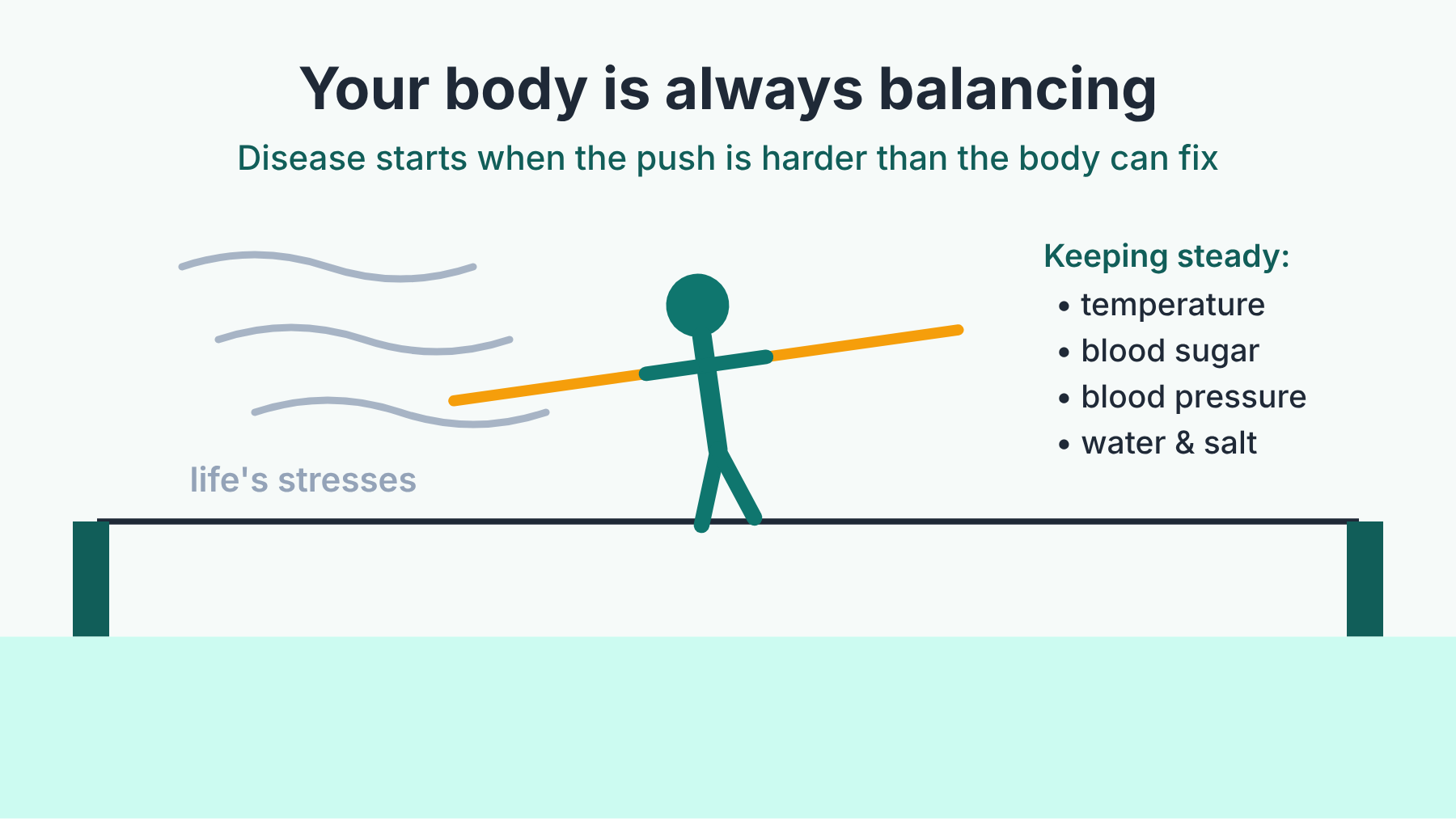
Disease begins when something pushes the body off balance harder, or for longer, than it can fix.
Two things usually meet
Most diseases happen when two things meet:
- What you carry inside: your genes. They decide how strong your body’s defence and repair systems are.
- What you meet outside: germs, smoke, food, alcohol, pollution, stress and injury. In short, your lifestyle, your environment and much more.
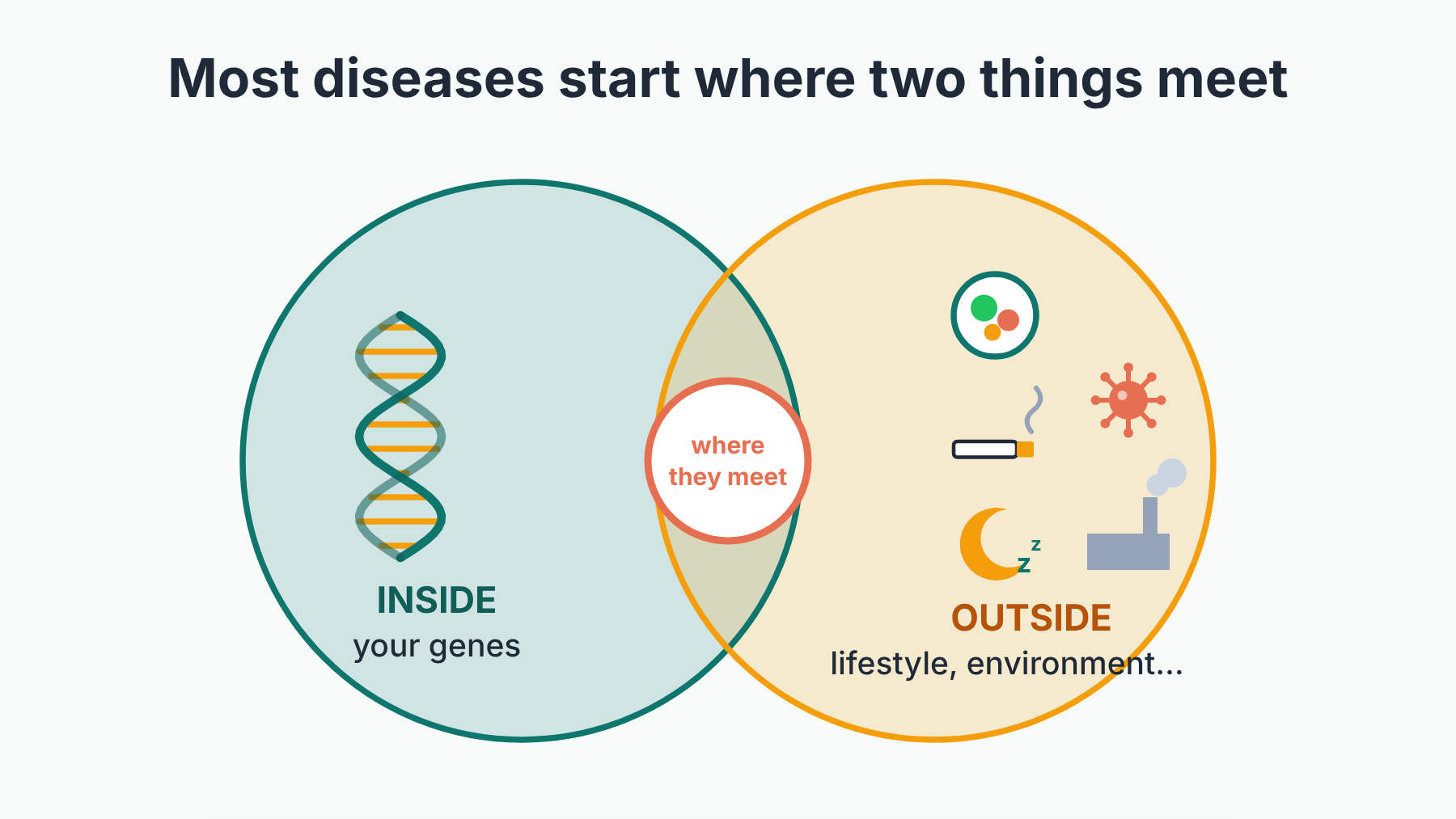
Neither one is usually enough on its own. It is the meeting that matters.
Same germ, different story
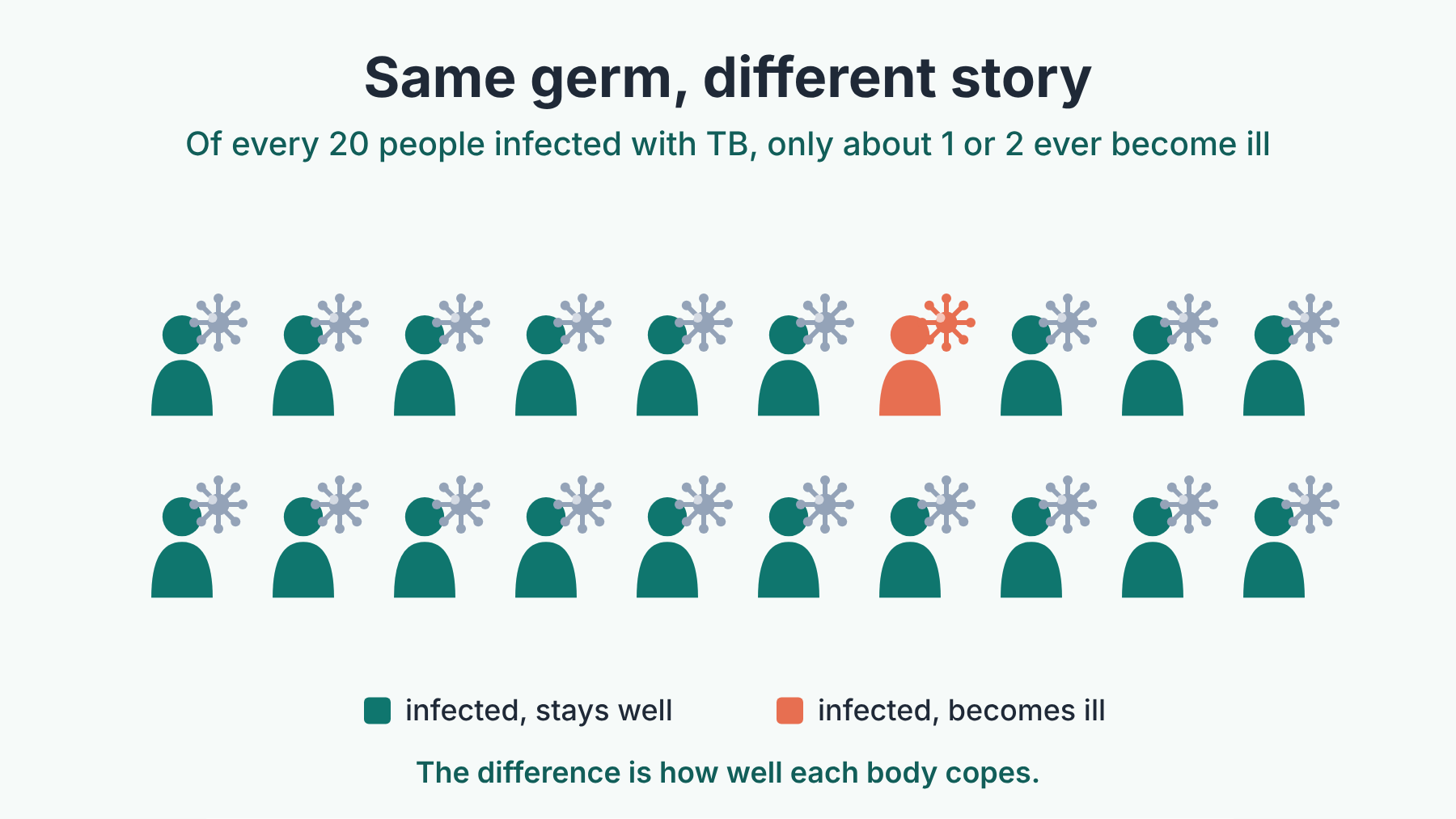
Imagine a whole family breathes in the same tuberculosis (TB) germ. Will they all get ill? No.
Only about 1 in 10 to 1 in 20 people infected with TB ever become ill. The germ is the same. What differs is how well each body copes. People with weaker defences, such as those with diabetes, poor nutrition or HIV, or people who smoke, are more likely to fall ill.
Same genes, different story
Genes matter. On average, about half of what makes us different from each other comes from our genes, and about half comes from the world around us.
But your genes are not your fate. Even people born with a high risk of heart disease can cut that risk by almost half by not smoking, keeping a healthy weight, staying active and eating well.
Your habits can even change how your genes behave. Smoking leaves chemical marks on thousands of genes. When people stop smoking, most of these marks fade back to normal within about five years. Your body tries to heal when you give it the chance.
When genes or chance act alone
Not every disease follows this pattern. A few conditions, such as Down’s syndrome, cystic fibrosis and Huntington’s disease, come mainly from genes and have little to do with lifestyle.
Chance plays a part too. Every time a cell copies itself, tiny mistakes can happen. Many of the changes that lead to cancer happen this way, by pure bad luck.
So if you become ill, it is not automatically your fault.
How much is in our hands?
More than most people think.
Our everyday lifestyle (what we eat, how much we move, how we sleep, how we handle stress, and whether we avoid harmful things like tobacco and alcohol) quietly shapes our health every single day.
Our environment, such as the air we breathe, the water we drink and the place we live, matters too. Some of this is up to us. Some of it depends on our communities and governments.
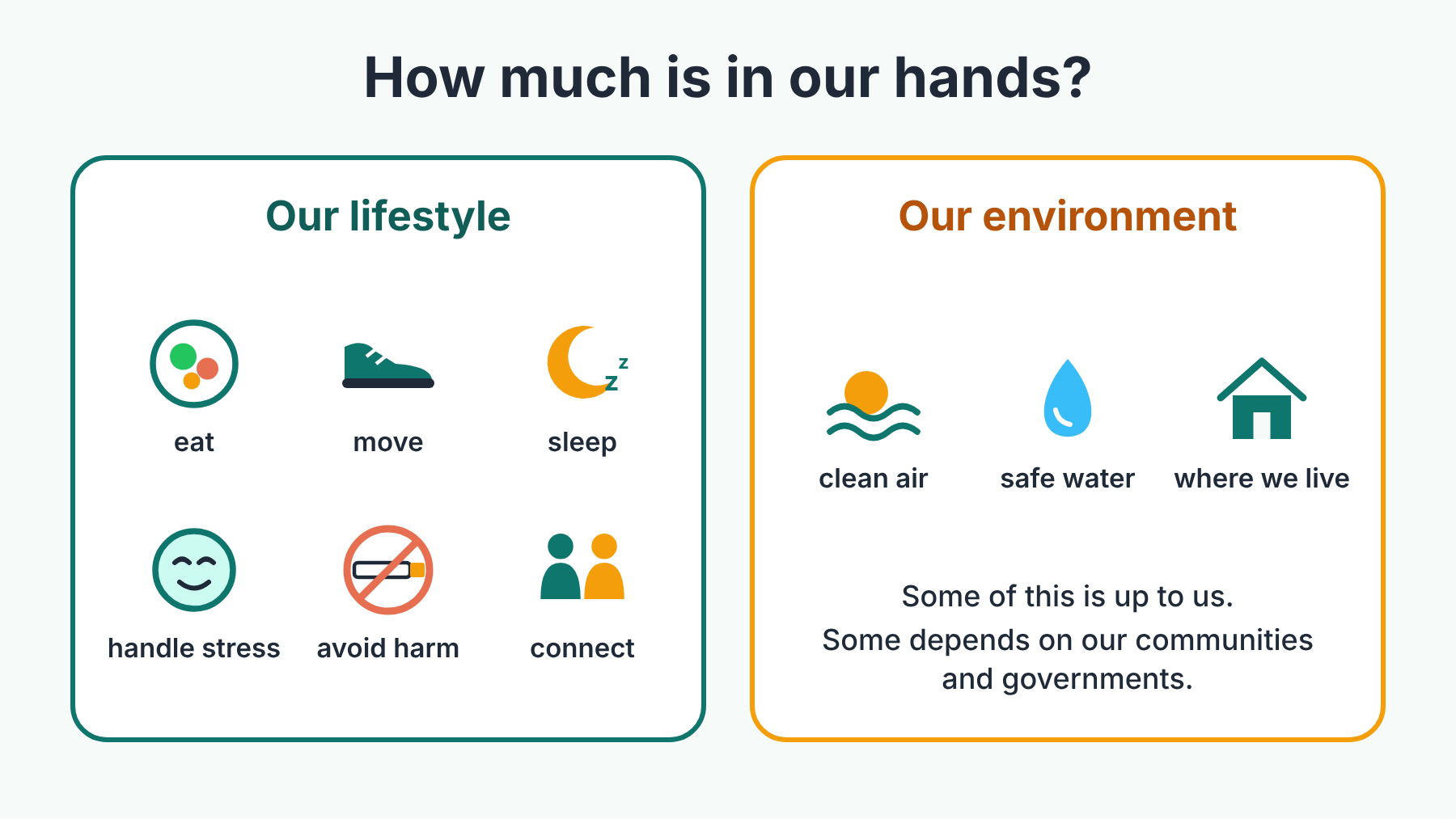
Between a third and a half of cancers could be prevented. Around half of all illness and early death worldwide is linked to things that can be changed.
What this means for you
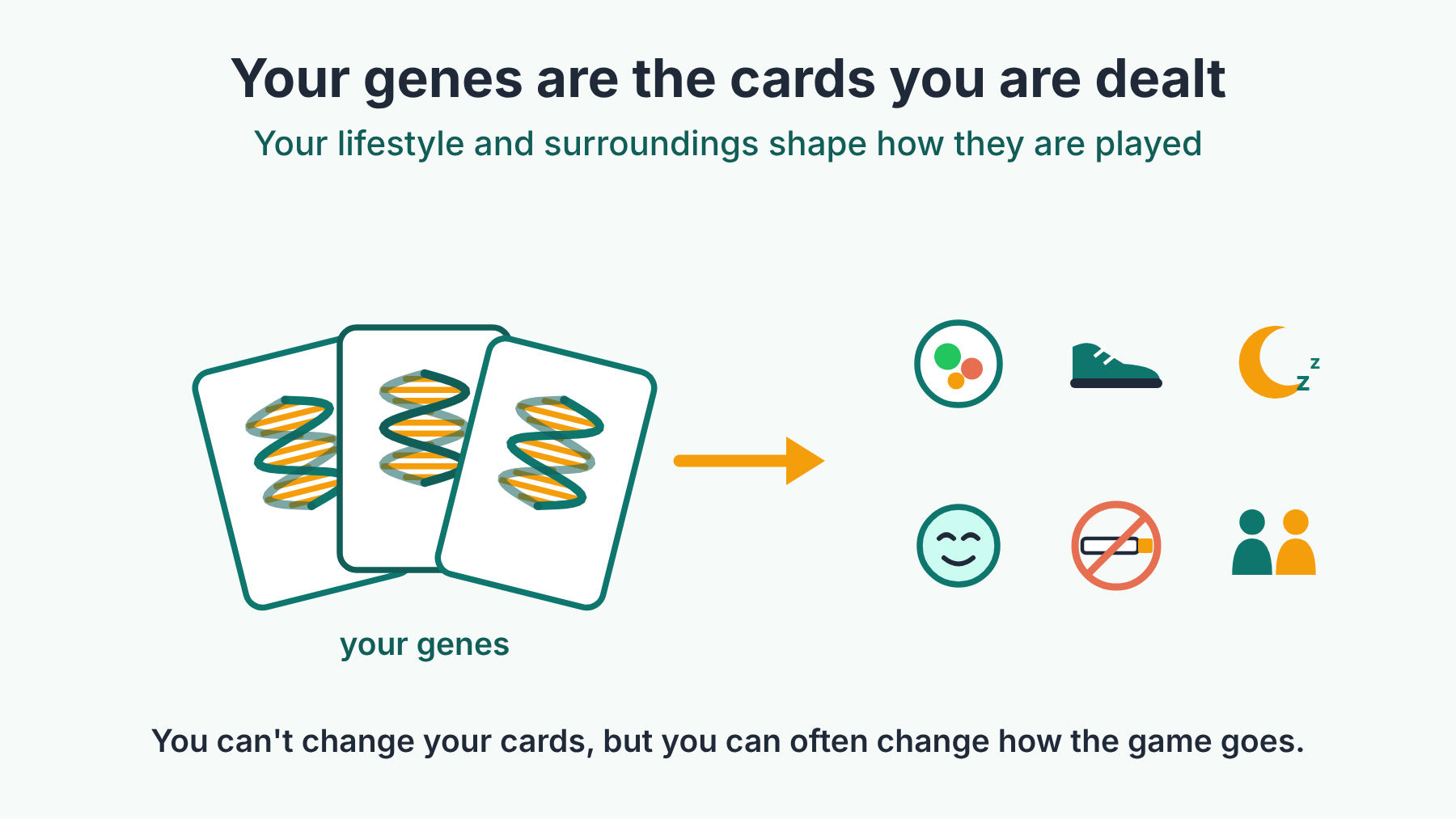
Think of your genes as the cards you were dealt. Your lifestyle and surroundings decide how those cards are played. You can’t change your cards, but you can often change how the game goes.
What’s next?
If disease comes from our genes meeting the world around us, the next question is: what in our world shapes our health? Find out in What decides our health?
Sources
- Mackenbach JP. The origins of human disease: a short story on “where diseases come from”. J Epidemiol Community Health 2006;60:81–86.
- Kumar V, Abbas AK, Aster JC. Robbins pathology (Robbins & Cotran Pathologic Basis of Disease). Elsevier.
- Epidemiologic triangle: University of Illinois, Introduction to Epidemiology, Ch. 2 (based on CDC teaching material).
- World Health Organization. Tuberculosis: key facts.
- Polderman TJC et al. Meta-analysis of the heritability of human traits based on fifty years of twin studies. Nat Genet 2015;47:702–9.
- Khera AV et al. Genetic risk, adherence to a healthy lifestyle, and coronary disease. N Engl J Med 2016;375:2349–58.
- Joehanes R et al. Epigenetic signatures of cigarette smoking. Circ Cardiovasc Genet 2016.
- Tomasetti C, Li L, Vogelstein B. Stem cell divisions, somatic mutations, cancer etiology, and cancer prevention. Science 2017;355:1330–4.
- World Health Organization. Noncommunicable disease risk factors.
- American College of Lifestyle Medicine. Six pillars of lifestyle medicine.
- World Health Organization. Preventing cancer.
- GBD 2023 Collaborators. Burden of 375 diseases and injuries, risk-attributable burden of 88 risk factors. Lancet 2025;406:1873–922.