
Written by Dr Nandan Jha, MBBS, MRCEM, MRCGP · October 2026
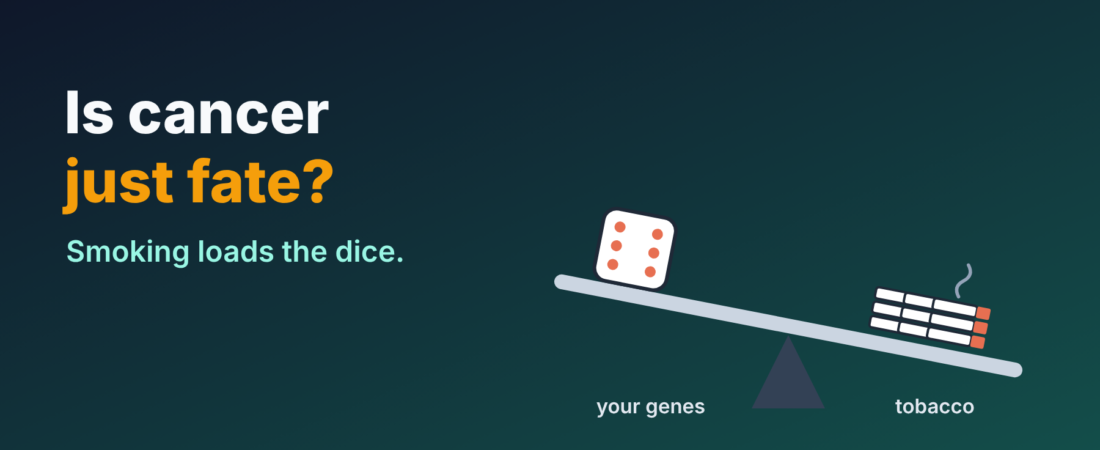
Myth: Cancer is down to fate, luck or karma. Smoking doesn’t really matter.
Fact: Tobacco greatly raises the odds of cancer and early death. Genes and chance play a part too, but cancer is not a punishment, and it isn’t written in the stars.
“My grandfather smoked every day for 60 years and lived to 90. My friend’s mum never smoked a single cigarette, and she got lung cancer. So what’s the point of quitting? When your number’s up, it’s up.”
Almost every family has a story like this. The words change from place to place: fate, destiny, God’s will, karma, bad luck. The idea is the same: illness is decided for us, so our choices don’t matter.
The stories are real, but the conclusion is wrong. Let’s look at both sides.
The smoker who was “fine”
Yes, it’s true that some smokers never get lung cancer. But smokers are 15 to 30 times more likely to get lung cancer or die from it than people who don’t smoke.
So the grandfather was lucky. And escaping lung cancer is not the same as escaping harm.
- About half of all long-term smokers are killed by smoking. On average, they die about 10 years earlier than non-smokers.
- Many die of heart attacks, strokes or lung disease rather than cancer.
- Where tuberculosis (TB) is common, smoking makes TB deadlier. In India, for example, smoking causes more than a third of TB deaths in men.
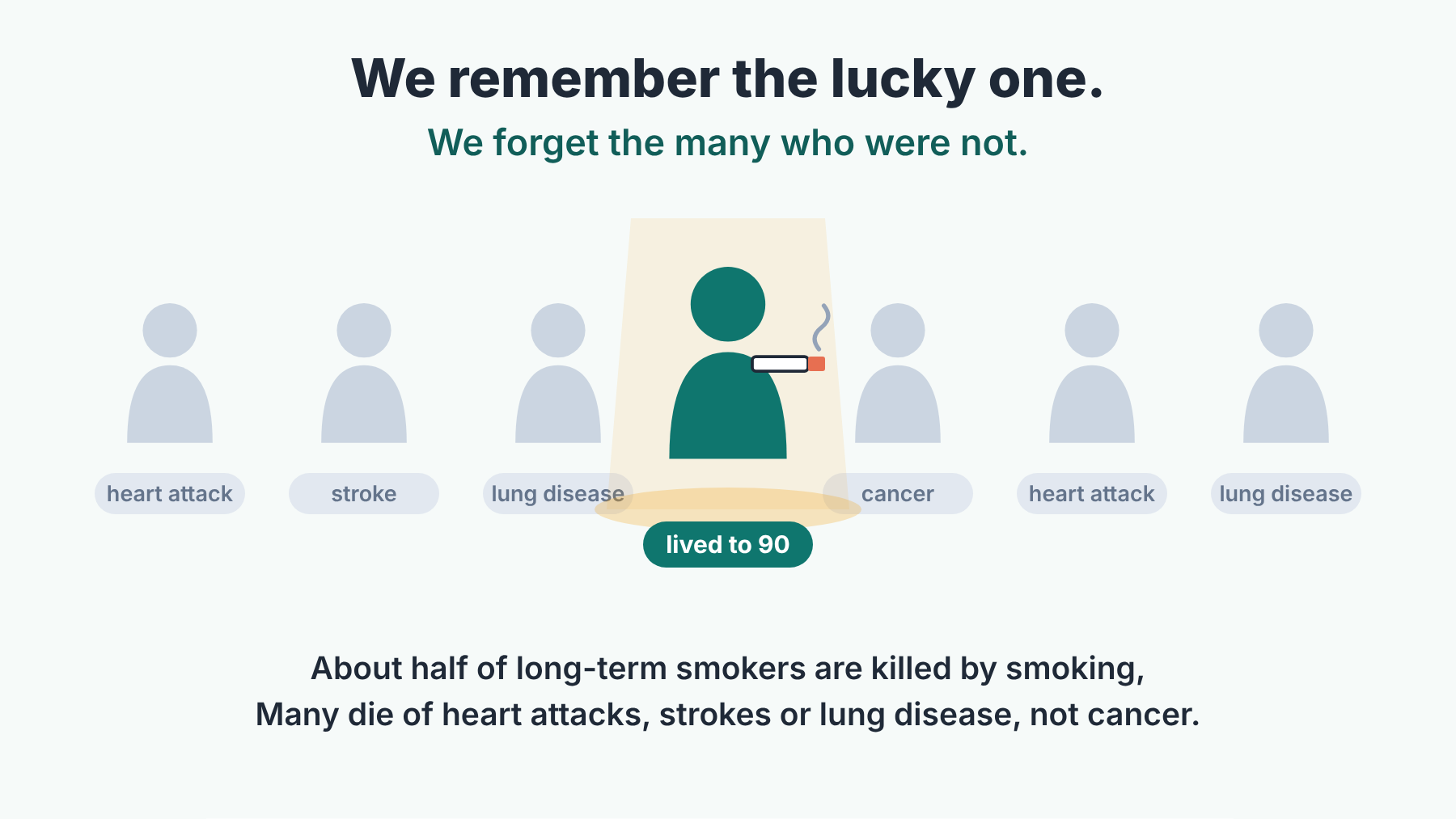
We remember the grandfather who reached 90. We forget the many who died at 55 of a heart attack, because their stories aren’t told at family gatherings. Luck is not a plan.
The non-smoker who got cancer
“Never smoked” doesn’t always mean “never exposed.”
- Second-hand smoke kills more than a million non-smokers worldwide every year.
- Polluted air is now a major cause of lung cancer in people who have never smoked. Today, almost everyone on Earth breathes air that falls short of World Health Organization standards.
- Smokeless tobacco and betel nut are common in parts of Asia. In India, about 1 in 5 adults use chewing tobacco. Chewing betel quid (paan) without tobacco raises the risk of mouth cancer about two and a half times, and with tobacco nearly eight times. Many people who chew it would still call themselves non-smokers.
- Radon gas and asbestos can also cause lung cancer.
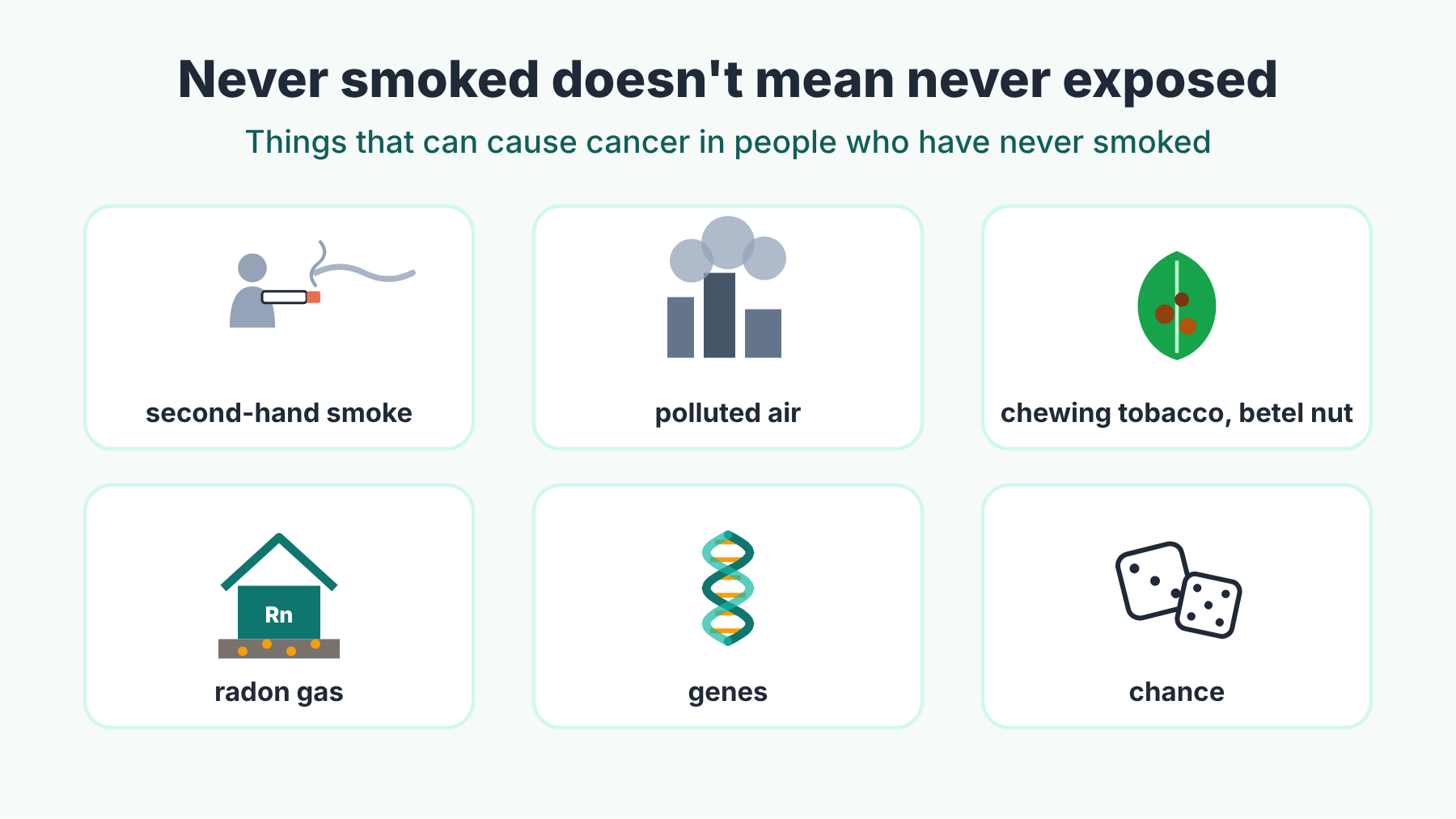
Sometimes there is no outside cause at all. As we saw in Where Does Disease Come From?, some people inherit genes that make cancer more likely. Every time our cells copy themselves, small mistakes can also happen by pure chance.
So a non-smoker’s cancer may come from genes, bad luck, or something they didn’t realise was harmful. It is never a punishment.
Genes and lifestyle work together
Think of your genes as the cards you were dealt. Some people get a stronger hand than others. That may be part of why some smokers escape cancer, though luck plays a big part too.
But here’s the key point: smoking makes the odds worse for everyone, whatever cards they hold. For lung cancer, smoking matters far more than genes. Heavy smoking raises the risk many times over, while genes shift it only a little.
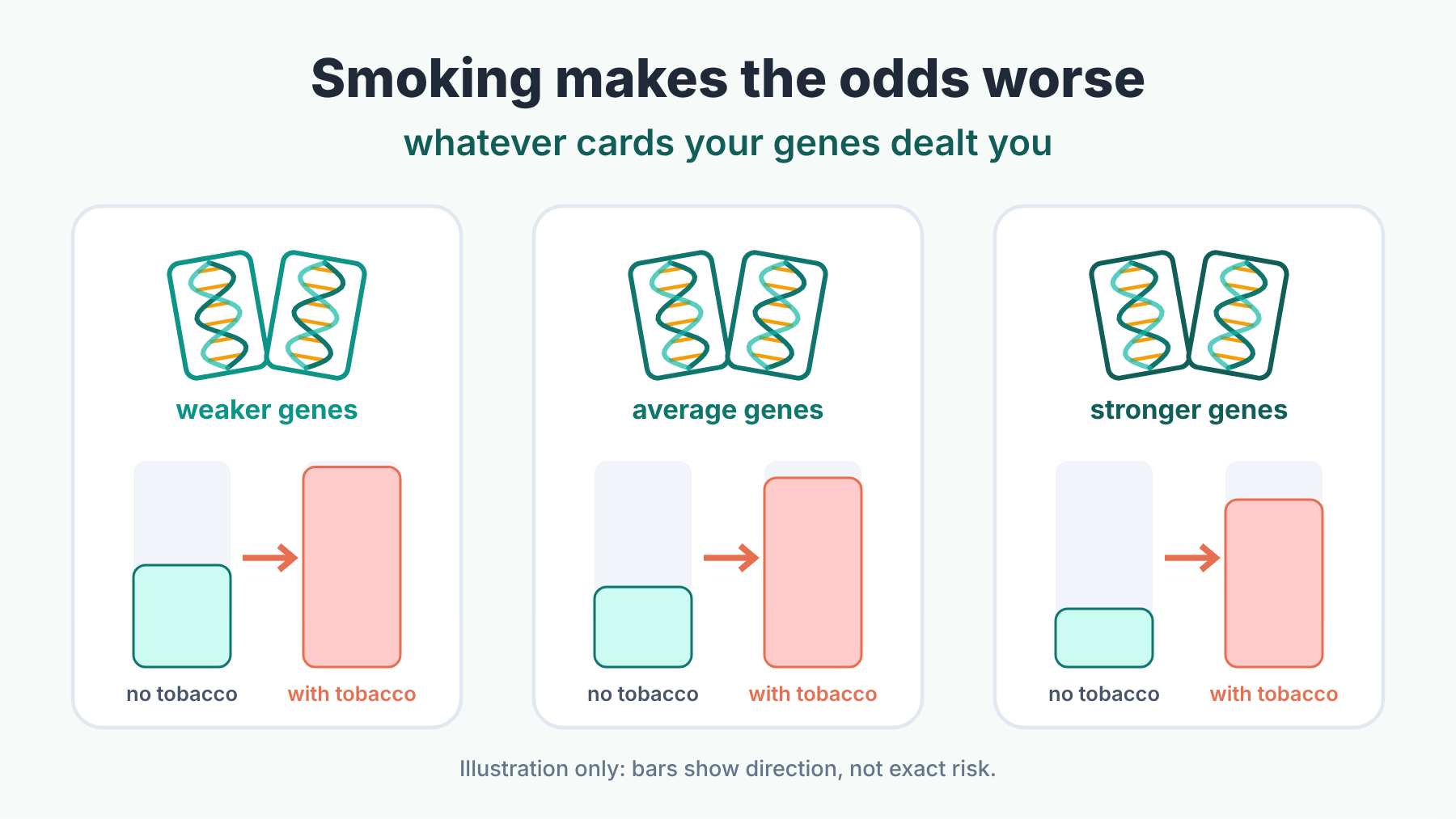
We can never know what would have happened to one particular person. We do know that no one can tell in advance whether their genes are strong. Smoking is a gamble with dice weighted against you.
What about fate, karma and God’s will?
Across the world, faith and belief help many families find meaning and strength in hard times. That deserves respect.
Beliefs about fate are common, and they vary a lot between communities. In one UK survey, about half or more of women from Indian, Pakistani and Bangladeshi communities said cancer is “down to fate,” compared with 6 in 100 White British women.
Science has found no link between how good a person is and whether they get cancer. Cancer happens to kind people and unkind people, to the careful and the careless.
Believing illness is fate or punishment can cause real harm:
- People with cancer often feel blamed, which adds shame and distress to an already hard time.
- If cancer is “meant to be,” why get checked? Thinking this way can delay a visit to the doctor, when early treatment matters most.
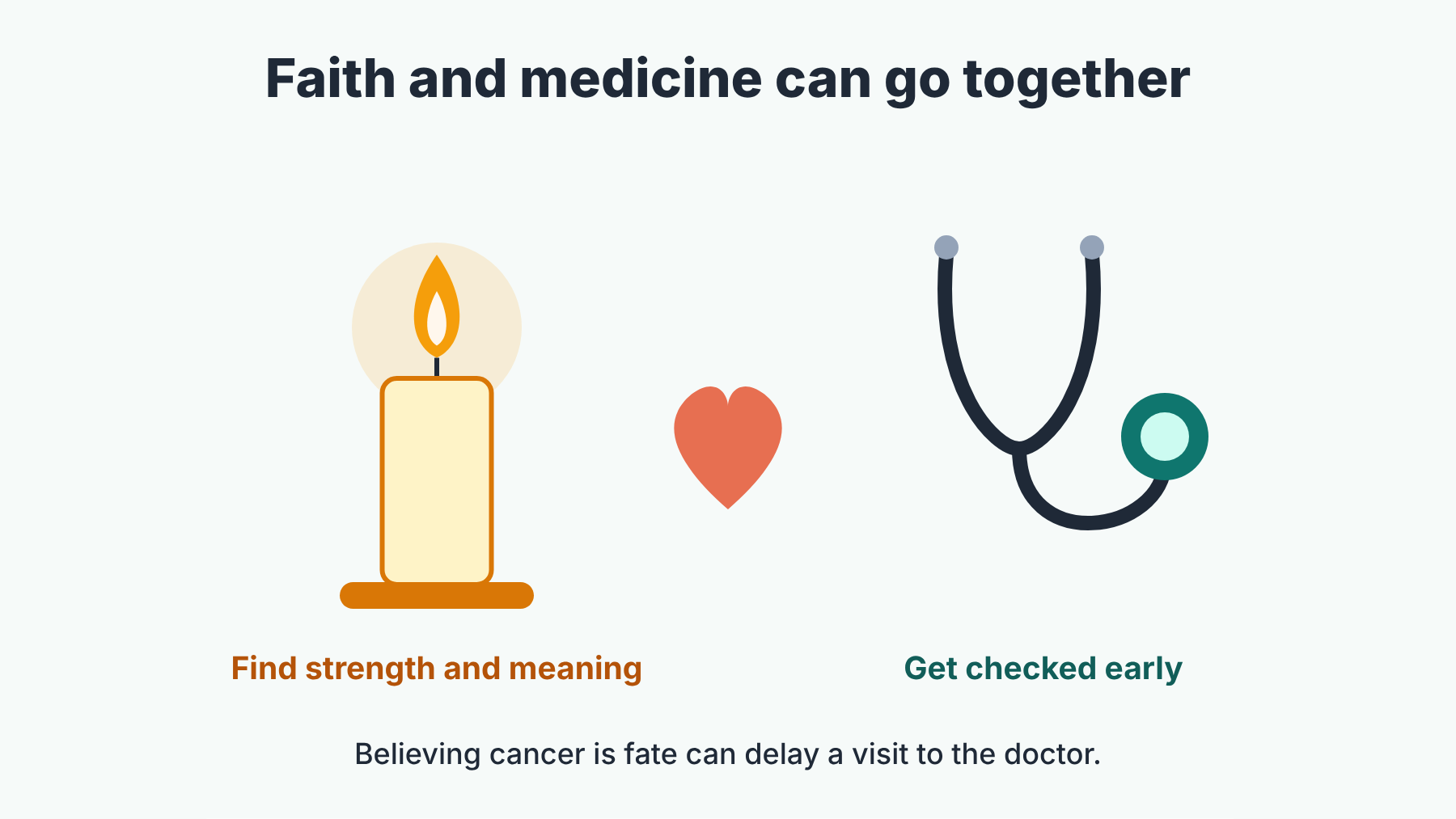
You don’t have to choose between faith and medicine. Many people pray for good health and see their doctor too.
The bottom line
- Some smokers escape lung cancer, but about half are killed by smoking in other ways.
- Non-smokers can get cancer from second-hand smoke, polluted air, chewing tobacco, betel nut, radon, genes or plain chance.
- Smoking makes the odds worse for everyone, whatever their genes.
- Cancer is not a punishment. No one deserves it.
The good news
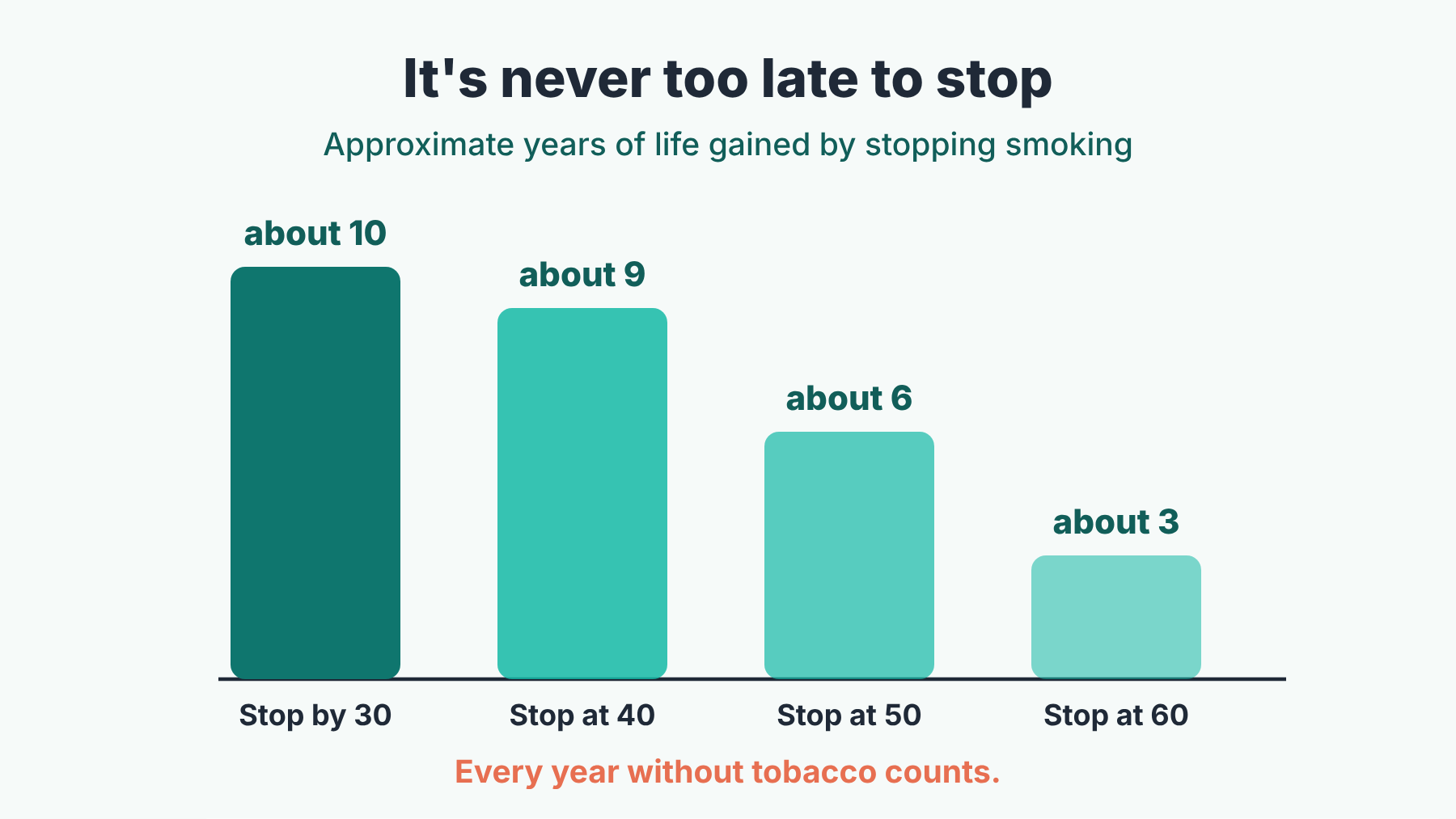
It’s never too late to stop. People who quit by 30 avoid almost all of the extra risk, and quitting by 50 roughly halves the risk of dying from smoking. Every year without tobacco counts.
If you use tobacco in any form, whether cigarettes, cigars, pipes, shisha, chewing tobacco or betel quid, your doctor or a local stop-smoking service can help you quit. And if you notice a mouth sore that won’t heal, or a cough that won’t go away, get it checked, whatever you believe about fate.
Sources
- Centers for Disease Control and Prevention (CDC). Lung cancer risk factors.
- Doll R et al. Mortality in relation to smoking: 50 years’ observations on male British doctors. BMJ 2004;328:1519.
- Jha P et al. A nationally representative case–control study of smoking and death in India. N Engl J Med 2008;358:1137–47.
- World Health Organization. Tobacco fact sheet.
- Lung cancer in never-smokers and air pollution (IARC/WHO). Lancet Respir Med 2025.
- NCI Sherlock-Lung study of lung cancer in never-smokers. Nature Genetics 2021.
- Ministry of Health and Family Welfare, India. Global Adult Tobacco Survey (GATS-2) 2016–17.
- Betel quid chewing and the risk of oral and oropharyngeal cancers: a meta-analysis. Int J Cancer 2013.
- Zhang P et al. Smoking, polygenic risk and lung cancer incidence (UK Biobank). Br J Cancer 2022.
- Vrinten C et al. Cancer fear and fatalism among ethnic minority women in the UK. Br J Cancer 2016.
- Chambers SK et al. A systematic review of the impact of stigma and nihilism on lung cancer outcomes. BMC Cancer 2012.