
Written by Dr Nandan Jha, MBBS, MRCEM, MRCGP · November 2026
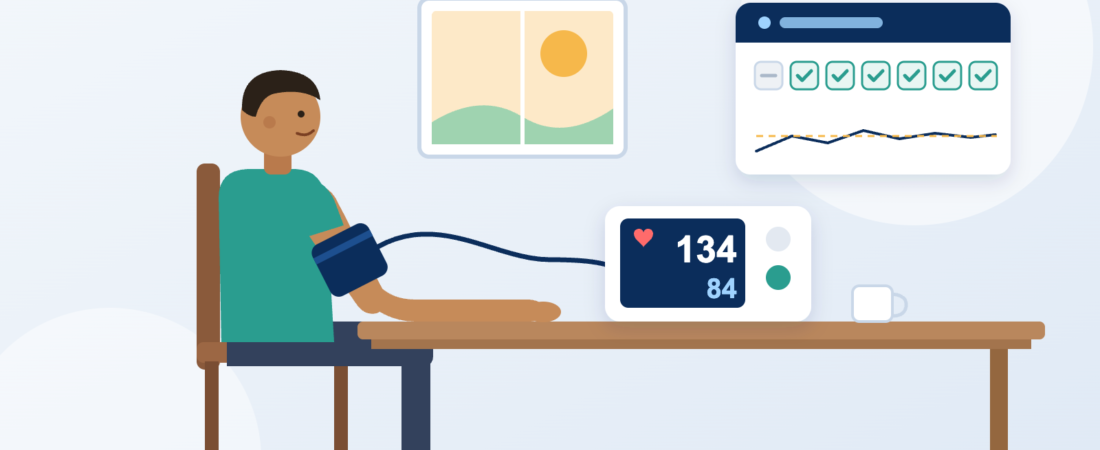
Maybe your doctor or nurse has asked you to check your blood pressure at home. Maybe a reading at the surgery, chemist or health camp was high, and now a quiet worry sits at the back of your mind: do I have high blood pressure? That worry is understandable, and you can find the answer at home.
Blood pressure is not one fixed number. It rises when you rush, talk, feel nervous or drink tea or coffee, and settles when you rest. One clinic reading can mislead. A careful week of home readings shows your true blood pressure. The newest international guideline now calls careful, standardised home monitoring the main way to diagnose and manage high blood pressure; casual now-and-then readings do not count.
Here is how to choose a machine, fit the cuff, measure, decide how often, work out your average and know when to call a doctor.
Already have your readings? Use our free Home Blood Pressure Average Calculator.
Feeling unwell right now? See warning signsWhich blood pressure machine is best for home use?
| Mercury column | Dial (aneroid) | Digital upper-arm · best for home | |
|---|---|---|---|
| + | The old reference standard | Mercury-free; widely used in clinics | Easy, no listening skill needed; recommended for home use |
| – | Toxic and being phased out; needs a stethoscope and training | Its spring loosens, so it needs checking every 6–12 months; needs a stethoscope and training | Only trust a model that has passed independent accuracy testing |
Fewer than 1 in 10 monitors on sale worldwide has passed proper accuracy testing. Before you buy, check your model on a validated list: BIHS (UK), STRIDE BP (international, useful in India) or ValidateBP (USA). Wrist and finger monitors are less accurate and are generally not recommended.
What size blood pressure cuff do I need?
The cuff matters as much as the machine. A cuff that is the wrong size, or put on the wrong way, can make your reading falsely high or falsely low. You might then worry, or take tablets you don’t need, or miss blood pressure that really is high.
| Cuff problem | What happens to the reading |
|---|---|
| Cuff too small for your arm | Reads higher than your true blood pressure |
| Cuff too big for your arm | May read lower |
| Cuff wrapped too loosely | Reads higher |
| Cuff wrapped too tightly | May read lower |
| Cuff over a sleeve | Reads higher |
Step 1 · Measure your arm
- Find the bony tip of your shoulder and the point of your elbow. Mark the spot halfway between them.
- Let your arm hang relaxed. Wrap a soft tape measure around your bare arm at that mark, snug but not squeezing.
- Read the number in centimetres.
Step 2 · Choose the right cuff
- Pick the cuff whose printed size range includes your number. Makers’ sizes differ, so follow your monitor’s instructions.
- The inflatable bag inside the cuff should wrap ¾ or more of the way around your arm.
- Arm over 42 cm? Ask your pharmacist or GP about a specially shaped large cuff. If an upper-arm cuff truly cannot fit, a validated wrist monitor may be used.
| Arm measurement | Cuff size (Indian guideline) |
|---|---|
| 22–26 cm | Small |
| 27–34 cm | Medium (standard adult) |
| 35–44 cm | Large |
| 45–52 cm | Extra-large |
Step 3 · Put it on correctly
- Use bare skin. Never put the cuff over clothes or push a tight sleeve up above it.
- Place the artery mark on the inside of your arm, in line with the inner elbow.
- Keep the lower edge about 2 finger-widths (2–3 cm) above the elbow crease.
- Make it snug, not loose and not tight: you should be able to slide 1–2 fingertips under the top and bottom edges, with equal tightness at both.
- Use the same arm each time, usually the left. If your doctor has told you one arm reads higher, use that arm.
What is the best time to check blood pressure at home, and how?
Measure when you are most relaxed.
- Morning: about half an hour after waking. Go to the toilet first, then measure before tea, coffee or breakfast, before any blood pressure tablets, and before the day’s rush and worries begin.
- Evening: when you are settled and relaxed, 30 minutes to 1 hour before bed.
- Keep to the same times each day.
- 1Don’t talk; keep still
- 2Back supported by the chair
- 3Cuff on the bare upper arm
- 4Arm resting on a table, cuff level with your heart
- 5Feet flat on the floor, legs uncrossed
- 6Quiet room; sit for 5 minutes first
- For 30 minutes before, avoid tea, coffee, smoking, food, bathing and exercise.
- Sit in a quiet, comfortable room for 5 minutes, back supported, feet flat, legs uncrossed.
- Rest your bare arm on a table so the cuff sits at the level of your heart.
- Don’t talk, and keep still, during and between readings.
- Take 2 readings, 1–2 minutes apart, and write both down. Never keep only the lowest one; that hides your true blood pressure.
How many days should I check my blood pressure at home?
- Checking for high blood pressure (diagnosis): 4–7 days, morning and evening.
- Already on treatment (monitoring): 3–5 days, morning and evening, before your review.
- In between: once or twice a week or month is enough; measuring many times a day only adds worry.
How do I calculate my average home blood pressure?
Day 1 is a practice day, so leave it out. Add up all the remaining top numbers and divide by how many there are; do the same for the bottom numbers. For 7 days of 2 readings morning and evening, that is 24 readings from Day 2 to Day 7.
Let us do the sums for you
Enter your readings in our free Home Blood Pressure Average Calculator. It leaves out Day 1, works out your average, warns you about any dangerous reading and makes a report with your name on it to print or send to your doctor. Your name is never saved.
Open the free calculatorWhat is a normal home blood pressure reading? (Blood pressure chart)
If your top and bottom numbers fall in different rows, go by the higher row. Chart based on UK, European and Indian guidance.
Home readings run a little lower than clinic readings, so 135/85 at home matches 140/90 at the clinic. American guidance draws its lines lower and calls 130/80 or more high blood pressure. The newest international guideline calls 130–139/80–89 “elevated blood pressure” and, once you are treated, aims for under 130/80 where safe. NICE aims for a home average under 135/85, or under 145/85 if you are 80 or over. With diabetes or kidney disease your target is often lower, so agree your own target with your doctor.
Targets if you have diabetes or kidney disease
These are clinic targets. Ask your doctor what your home target is. ACR is a urine test for protein (mg/mmol).
| UK (NICE) | India (IGH-V) | USA (AHA/ACC) | International (ISH) | |
|---|---|---|---|---|
| Type 2 diabetes | Under 80: under 140/90 80 or over: under 150/90 | 120–129 / 70–79 if possible | Under 130/80 | Under 130/80 where safe |
| Type 1 diabetes | Under 80: under 140/90 if ACR below 70; under 130/80 if ACR 70 or more 80 or over: under 150/90, whatever the ACR | 120–129 / 70–79 if possible | Under 130/80 | Under 130/80 where safe |
| Kidney disease | Any age: under 140/90 if ACR below 70; under 130/80 if ACR 70 or more | Under 130/80 | Under 130/80 | Under 130/80 where safe |
When should I see a doctor, and when is high blood pressure an emergency?
- your home average is 135/85 or more and you have not been diagnosed;
- you are on treatment and your average is above your target; or
- you feel dizzy or unsteady when you stand up.
- chest pain, or sudden severe back pain
- breathlessness
- severe headache, new confusion, or a change in your vision
- weakness or numbness, or difficulty speaking
- very little urine, or blood in your urine
- collapse
Stroke signs and collapse always need an ambulance, whatever the reading.
Frequently asked questions
What is a normal blood pressure at home?
A home average below 130/80 is normal. A home average of 135/85 or more counts as high blood pressure in UK, European and Indian guidance; American guidance uses 130/80.
Is blood pressure lower at home than at the clinic?
Usually, yes. Home readings run about 5 points lower, so 135/85 at home matches about 140/90 at the clinic.
What is the best time of day to check blood pressure?
When you are most relaxed: in the morning about half an hour after waking, after the toilet and before tea, coffee, breakfast or tablets; and in the evening 30 minutes to 1 hour before bed.
Should I write down the lowest reading?
No. Take 2 readings 1–2 minutes apart, write both down and use the average of all your readings, leaving out Day 1. Keeping only the lowest hides your true blood pressure.
Can a smartwatch or ring measure my blood pressure?
Not accurately enough yet to diagnose or manage blood pressure. Use an alert as a reason to check with a validated upper-arm cuff monitor.
What blood pressure reading is an emergency?
A reading of 180/120 or more with symptoms such as chest pain, breathlessness, severe headache, confusion, vision change, weakness or difficulty speaking needs an ambulance. If you feel well, rest 5 minutes and recheck; if it is still that high, contact your doctor or urgent care the same day.
So if your doctor has asked you to check, or you are worried your blood pressure might be high, you now know how to find out properly: a validated upper-arm monitor, a cuff that fits, a relaxed routine, an honest average, and knowing when to speak up. That average is the number worth taking to your doctor.
What’s next? Record a week of readings in our free calculator. It works out your average and makes a report for your doctor.
Coming soon: Can my smartwatch measure my blood pressure? Our Mythbusters page on smartwatches, rings and cuff-free devices.