

Written by Dr Nandan Jha, MBBS, MRCEM, MRCGP · Last reviewed November 2026 · Next review November 2027
Mrs Sharma is 78 and lives alone. One night she gets up quickly to use the toilet. The room spins, her legs give way, and she falls. Mrs Sharma is made up, but this kind of fall is exactly what we want to prevent.
The short answer: if you feel dizzy when you stand up, your blood pressure may be dropping. This is called orthostatic or postural hypotension. It is common in older people, it can cause falls, and there is a lot you can do about it.
Call 999 if you have fallen and may have hurt your head, neck, back or hip, or you cannot get up.
At a glance
- Low blood pressure is a reading below 90/60.
- It may not need treatment if you have no symptoms.
- A drop on standing can cause falls.
- Some medicines can cause it, but do not stop them on your own.
- Rising in stages, simple exercises and a walking aid can help keep you safe.
Jump to: Causes · Symptoms · When to seek help · Medicines · What helps · Exercises · If you fall · For families
What is low blood pressure?
Low blood pressure, or hypotension, is a reading below 90/60. It can be normal for fit people, and it can run in families. It can also be linked to ageing, pregnancy, diabetes or medicines.
What are the types of low blood pressure?
- Constant low blood pressure: the reading stays low most of the time. This is seen more often in younger people.
- Orthostatic (postural) hypotension: blood pressure falls when you stand up. This is seen more often in older people.
What is orthostatic hypotension?
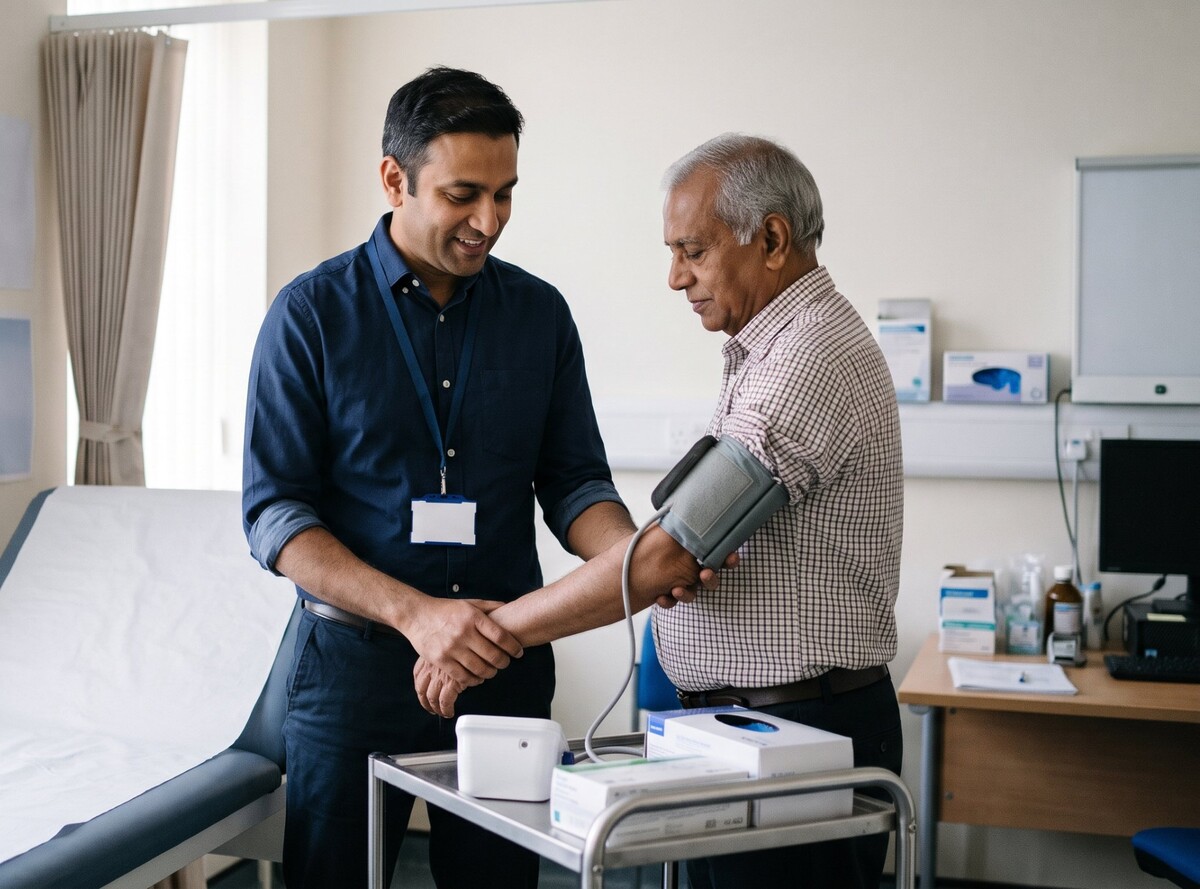
It is a drop in blood pressure when you stand up. Your doctor can confirm it by checking your blood pressure lying down and then standing. Ideally, you should rest lying down for at least 3 minutes first.
It is confirmed if, within 3 minutes of standing, your:
- Top number (systolic) falls by 20 or more, or
- Bottom number (diastolic) falls by 10 or more
Why does blood pressure drop when you stand up?
When you stand, blood moves down towards your legs. In younger people, the body reacts within moments and keeps blood pressure steady. As we get older, this reaction can become weaker, so the pressure drops and less blood reaches the brain.
There can also be other causes:
- Diabetes
- Heart failure, anaemia and vitamin B12 deficiency
- Parkinson’s disease and some types of dementia
- Dehydration and long periods in bed
- Hot weather, alcohol, infection and large meals
- Some medicines
What are the symptoms of orthostatic hypotension?
- Dizziness or light-headedness
- Feeling sick, hot or clammy
- Blurred, grey or dark vision
- Feeling muddled
- Weakness or tiredness
- Palpitations
- Pressure across the back of the shoulders or neck
- Fainting
Symptoms are often worse in the morning, or after sitting or lying for a long time.
When should I seek medical help for low blood pressure or a slow heart rate?
These numbers matter at any age, including in young people.
Blood pressure below 90/60
- No symptoms: you may not need treatment.
- Dizziness, fainting or other symptoms: speak to your doctor. Ask for a lying and standing blood pressure check.
Resting heart rate below 60
- This counts as a slow heart rate.
- It can be normal in very fit people, and it often happens during sleep.
- If you are fit and have no symptoms, try not to worry.
- See your doctor if it stays slow, or you feel dizzy, faint, unusually tired, weak or have palpitations.
- Beta-blockers can slow your heart rate, so tell your doctor if you take one.
Resting heart rate below 40 while awake
Seek medical help the same day, even if you are young.
Call 999 if you faint, have trouble breathing or have chest pain that lasts more than a few minutes.
Why is low blood pressure dangerous in older people?
Around 1 in 5 older adults living at home has orthostatic hypotension. It is linked with nearly double the odds of falling.
A fall can lead to a fracture and a hospital stay, and it can affect quality of life. The risk is greater if you live alone, have mobility problems or have other health conditions, as help may not arrive quickly.
Studies also link this condition with heart disease, stroke, dementia and earlier death, although this evidence is not strong enough to prove that it is the cause.
Which medicines can make you dizzy when you stand up?
More than 250 medicines have been linked with orthostatic hypotension.
| Link in trials | Medicines | Often used for |
|---|---|---|
| Clearest | Beta-blockers | High blood pressure, angina, heart failure |
| Clearest | Tricyclic antidepressants, such as amitriptyline | Depression, and at low doses for pain and sleep |
| Clear | Alpha-blockers, such as tamsulosin | Prostate and bladder symptoms |
| Clear | Centrally acting blood pressure medicines | High blood pressure |
| Clear | Newer antipsychotics | Mental health conditions |
| Smaller | SGLT-2 inhibitors | Diabetes |
Other medicines to mention include ACE inhibitors, ARBs, calcium channel blockers, diuretics, benzodiazepines, opiates, Parkinson’s medicines and sildenafil. In the trials, ACE inhibitors, ARBs and calcium channel blockers did not show a clear increase. These results may not apply fully to older people, as many trials left them out.
Taking several medicines? The risk of a drop in blood pressure may add up. If you feel dizzy or light-headed when you sit up or stand up, speak to your doctor. Ask them to check for orthostatic hypotension, using a lying and standing blood pressure check.
Do not stop any medicine on your own. Good blood pressure control usually still matters, even in older adults. Your doctor can look for a safer option.
How is orthostatic hypotension treated?
Your doctor will review your medicines and look for a cause. They may suggest compression stockings. If your symptoms are severe, a specialist may consider medicines such as midodrine or fludrocortisone.
How can I stop feeling dizzy when I stand up?
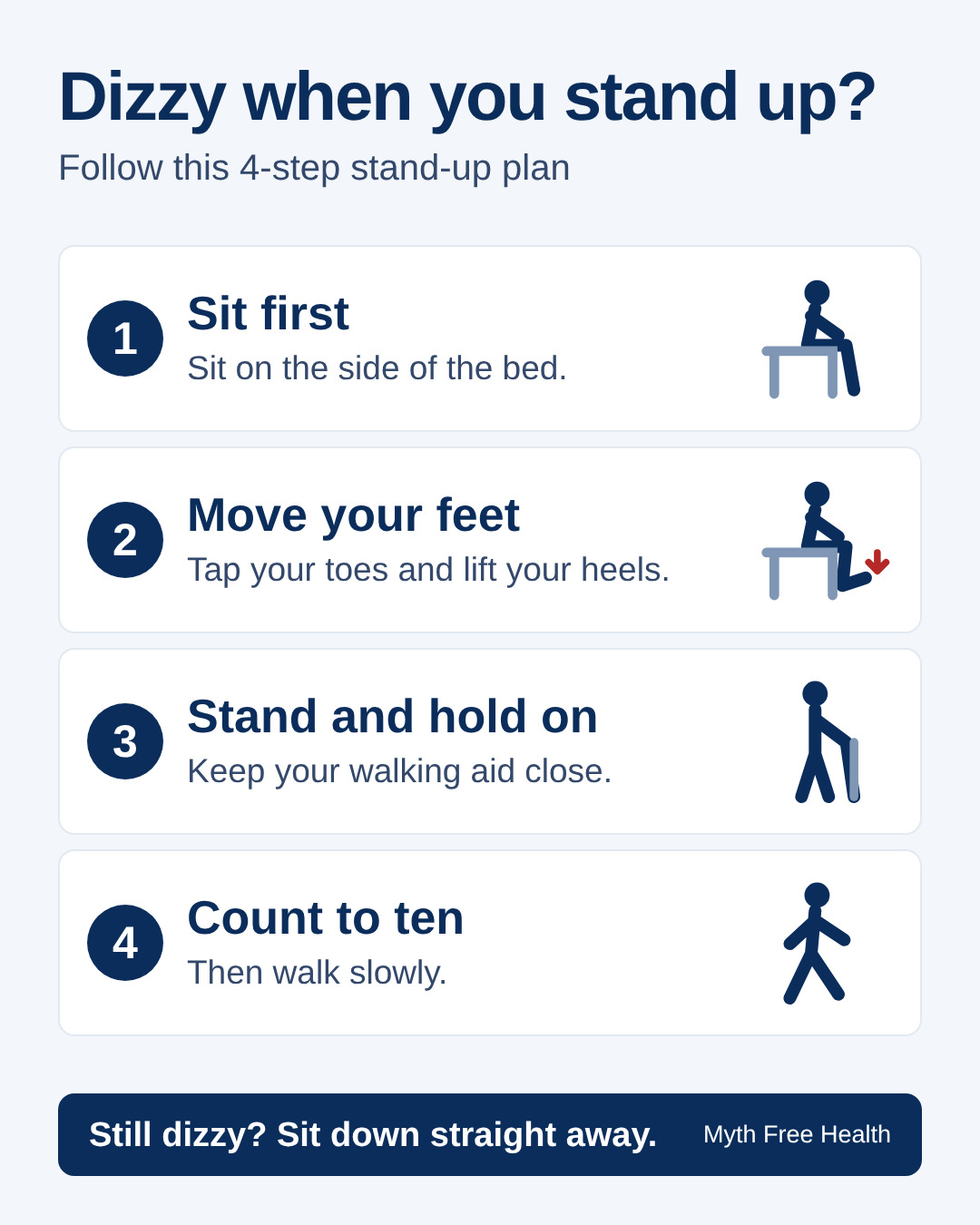
- Rise in stages. Sit on the side of the bed, stand, then count to ten before you walk.
- Take your time when getting up from a chair.
- Take special care at night, when many falls happen.
- Drink enough fluid. Aim for about 2 litres a day, unless your doctor has told you to limit fluids. Have a glass of water before getting up.
- Try sleeping with your head raised on extra pillows.
- Sit down to wash, shower, dress or work in the kitchen, where you can.
- Avoid bending down or stretching up.
- Eat smaller meals, and limit alcohol.
- Avoid getting too hot, including hot baths and showers.
- Avoid straining on the toilet.
- Stay active.
Should I use a walking stick if I feel dizzy?
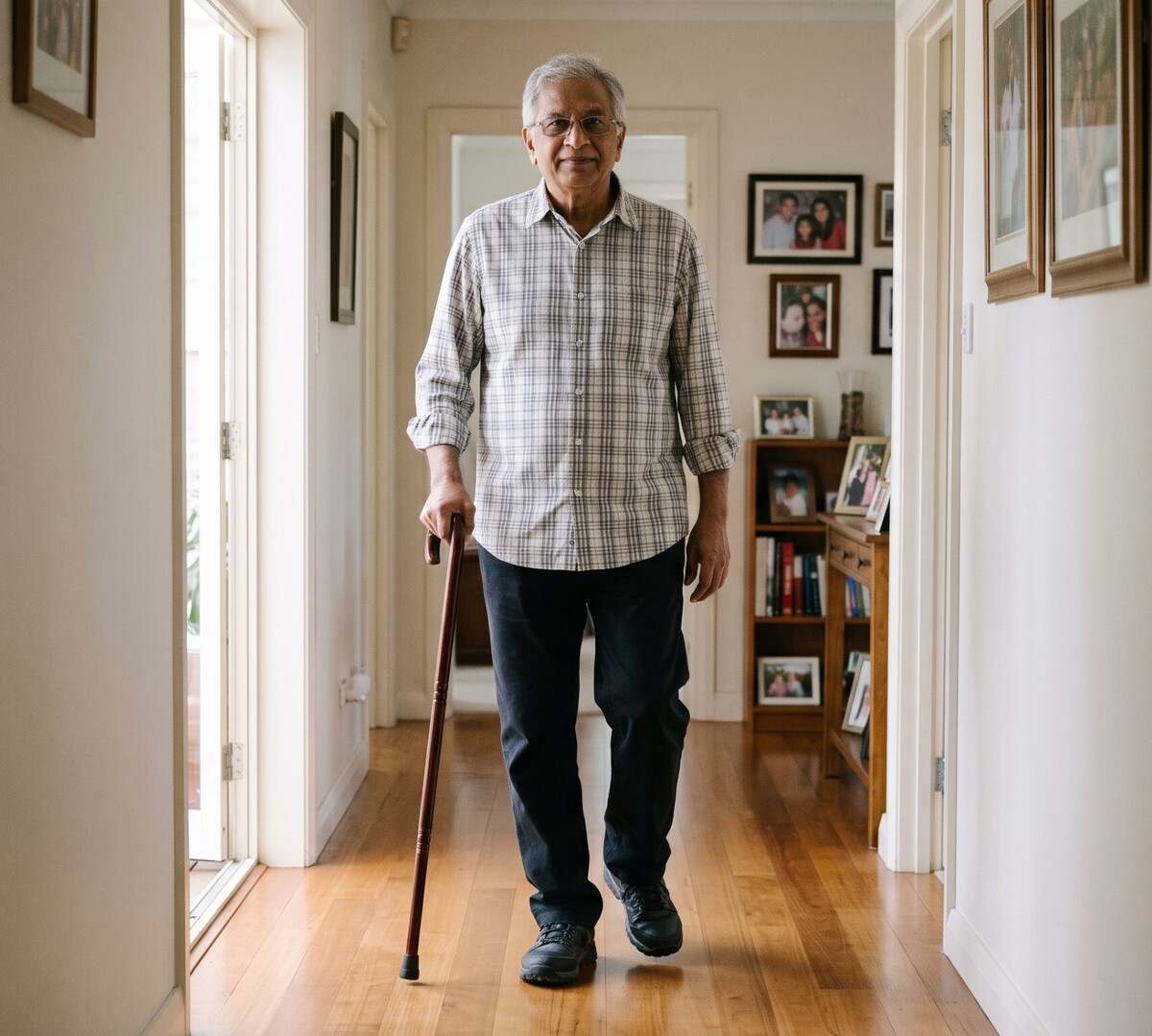
Yes, if you feel unsteady, a stick or walking aid can help you avoid a fall. Keep it within reach, so it is there when you stand up.
It does not have to be forever. You may only need it while you recover from an illness, or until you have seen your doctor. Using support is not giving up. It is a sensible way to protect yourself.
Does salt help low blood pressure?
Do not add extra salt or drink salt water on your own. If your symptoms are severe, ask your doctor whether more salt could help.
What exercises help with dizziness on standing?
Do these while sitting, before you stand:
- Toe taps: keep your heels down, then lift and tap your toes for 10 seconds. Do this 3 times.
- Heel lifts: rise onto your tiptoes, then lower your heels, for 10 seconds. Do this 3 times.
- Marching: march your legs briskly for 10 seconds. Do this 3 times.
- Leg extensions: straighten one knee and hold for 10 seconds. Do this 3 times, then change legs.
Once standing, clench the muscles in the backs of your legs before you walk.
What should I do if I feel dizzy?
Stop and sit down straight away, even if it means sitting on the floor. If you still feel unwell, lie down. Rising on your heels or squeezing a small ball can also help if you feel faint.
What should I do if I fall?
- Stop, think and plan. Stay calm, and check for pain or injury.
- If you can get up, roll onto your side, move onto your hands and knees, hold something sturdy, then rise slowly and sit down.
- Call 999 if you may have hurt your head, neck, back or hip, or you cannot get up.
- If you cannot reach a phone, shout or bang on the wall or floor.
- Stay warm with anything close by, such as a towel, rug or blanket.
- Keep moving the parts of your body that do not hurt, and change position about every 30 minutes.
How can I stay safe if I live alone?
- Wear your care alarm or carry a mobile phone. An alarm only works if you are wearing it.
- Clear away clutter, wires and loose rugs.
- Use non-slip mats, and well-fitting shoes or slippers with a good grip.
- Do strength and balance exercises at least twice a week.
Worried about a parent or relative?
Many older people do not mention dizziness or a near fall. You could:
- Ask whether they feel dizzy when they stand up, especially at night.
- Check that their phone or alarm is always within reach.
- Help them make a full list of their medicines.
- Go with them to ask for a lying and standing blood pressure check.
What should I tell my doctor?
Take this list to your appointment:
- When you feel dizzy, and what you were doing
- Any falls or near falls
- All your medicines, including those you buy yourself
Questions to ask:
- Can you check my lying and standing blood pressure?
- Could any of my medicines be causing this?
- Would a walking aid help me for now?
If this sounds like you or your parents, mention it at your next appointment. A simple lying and standing blood pressure check could prevent a serious fall.
Photos on this page are illustrative images made with AI.
Read next: The Pump, the Pipes and the Silent Pressure: Understanding High Blood Pressure
References
- NHS. Low blood pressure (hypotension).
- NICE. Hypertension in adults (NG136). Updated February 2026.
- Clement DL. Low blood pressure. E-Journal of Cardiology Practice. ESC, 2019;17.
- Saedon NI, et al. The prevalence of orthostatic hypotension. J Gerontol A 2020;75:117–22.
- Soysal P, et al. Orthostatic hypotension and health outcomes. Eur Geriatr Med 2019;10:863–70.
- Bhanu C, et al. Drug-induced orthostatic hypotension. PLoS Med 2021;18:e1003821.
- NHS Highland. Orthostatic hypotension guidelines.
- Royal Devon University Healthcare. Orthostatic or postural hypotension.
- Cambridge University Hospitals. Postural hypotension. June 2026.
- NHS. Falls.
- Oxford Health NHS Foundation Trust. Orthostatic hypotension (OP 111.15).
- British Heart Foundation. Heart and pulse rate: what’s normal and how to check it.
- British Heart Foundation. Bradycardia: when to worry about a low heart rate.
- Mayo Clinic. Bradycardia.